
The Sea Hawk is a 1940 adventure film directed by Michael Curtiz. The film stars Errol Flynn, Brenda Marshall, and Claude Rains. Although named after Rafael Sabatini’s 1915 novel The Sea Hawk, the 1940 film version of The Sea Hawk featured an entirely different story.
Director: Michael Curtiz
Production Company: Warner Bros.
Distributor: Warner Bros.
Cast: Errol Flynn, Brenda Marshall, Claude Rains, Donald Crisp, Flora Robson, Alan Hale, Henry Daniell, Una O’Connor
US Box Office: $4,077,500 ($162,600,000 adjusted for inflation)
Film Format: Black & White, Sepia tone (the Panama scenes)
Genre: Adventure
Release Date: August 10, 1940 (premiere); August 31, 1940
Plot Summary: Captain Geoffrey Thorpe (Errol Flynn) works as a privateer for England in the late 1500s. Thorpe raids a Spanish ship carrying Don Alvarez (Claude Rains), Spain’s ambassador to England, and Alvarez’s niece Dona Maria (Brenda Marshall), and he brings the two back to England with him. Dona Maria hates Thorpe at first, but she soon warms up to him. With the permission of Queen Elizabeth (Flora Robson), Thorpe secretly sails to Spanish Panama to raid a Spanish gold shipment. Don Alvarez and the treacherous Lord Wolfingham (Henry Daniell) are aware of Thorpe’s mission and set a trap for him, hoping to use the raid as an excuse to start a war between Spain and England.
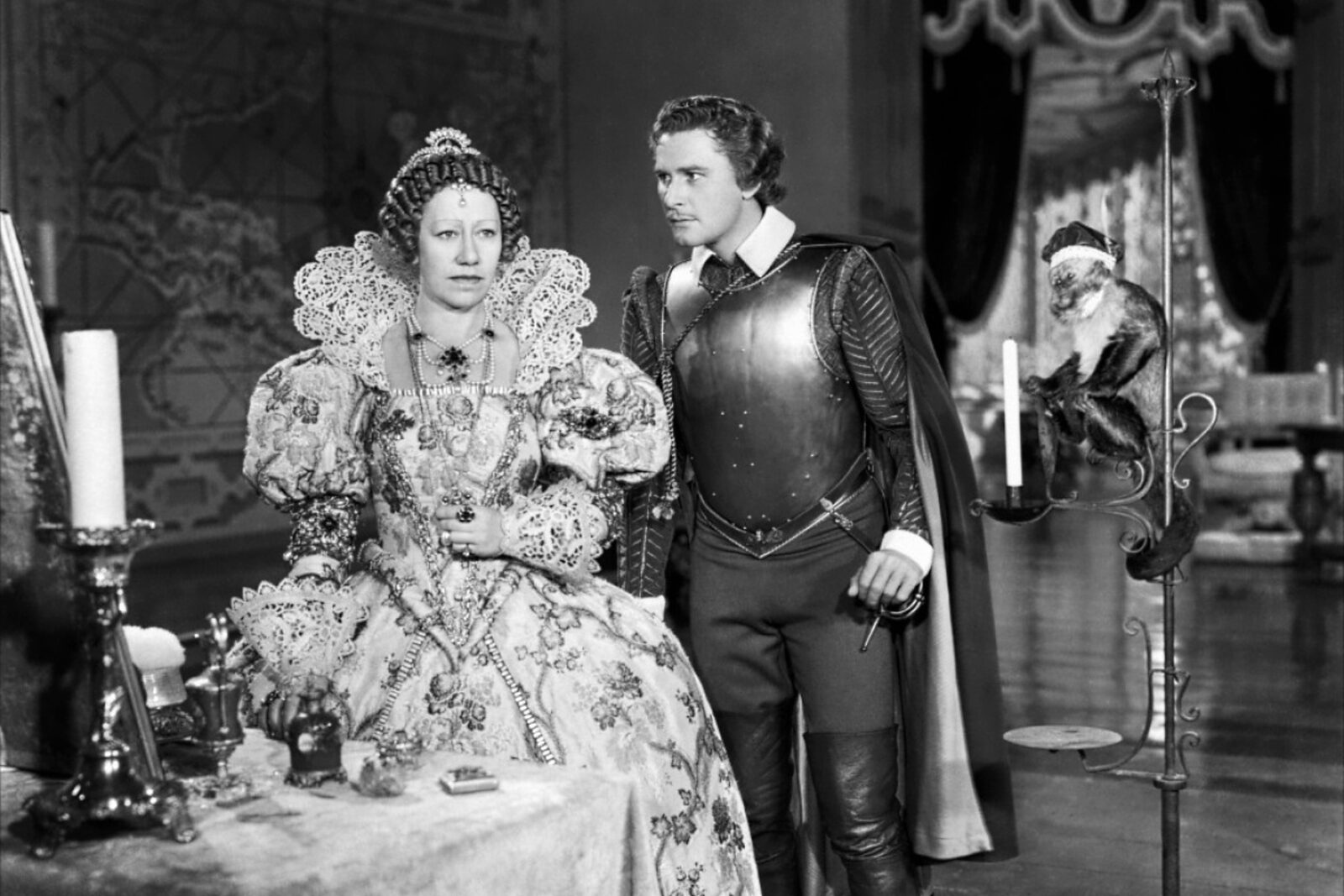
Production: In June of 1936 Warner Bros. executives led by Jack L. Warner began early pre-production work on a film adaptation of Rafael Sabatini’s 1915 novel The Sea Hawk. Henry Blanke and Hal B. Wallis were chosen to produce The Sea Hawk and the film was planned to star Errol Flynn, fresh from his breakout role in the adventure film Captain Blood (1935). First National Pictures (which was acquired by WB in 1928) had previously produced a film adaptation of the novel in 1924. Although originally intended as a faithful adaptation of Sabatini’s novel, Blanke and Wallis decided to give the film an original story because they thought that the plot was too similar to Captain Blood (which was also based on a Sabatini novel).
Screenwriter Seton I. Miller wrote the first screenplay for The Sea Hawk, titled Beggars of the Sea. This screenplay featured an original story and was inspired by the adventures of English privateer Sir Francis Drake. Howard Koch rewrote the script, while keeping Miller’s overall story and structure intact. As the story was so different from Sabatini’s novel, Warner Bros. considered changing the film’s name to Beggars of the Sea but ultimately kept the title as The Sea Hawk. Although set during the Anglo-Spanish War, The Sea Hawk was intended as an allegory for the then-ongoing World War II (with the Kingdom of Spain serving as a stand in for Nazi Germany) and was meant to influence the American people into having a more pro-British outlook (the United States was still officially neutral in 1940).
Hungarian-American director Michael Curtiz was chosen to direct The Sea Hawk. Curtiz was a prolific and dependable studio director for Warner Bros. The Sea Hawk was the ninth of twelve films to pair Curtiz with star Errol Flynn. Erich Wolfgang Korngold composed the score for The Sea Hawk. He had previously worked with Curtiz and Flynn on Captain Blood, The Adventures of Robin Hood (1938), and The Private Lives of Elizabeth and Essex (1939).
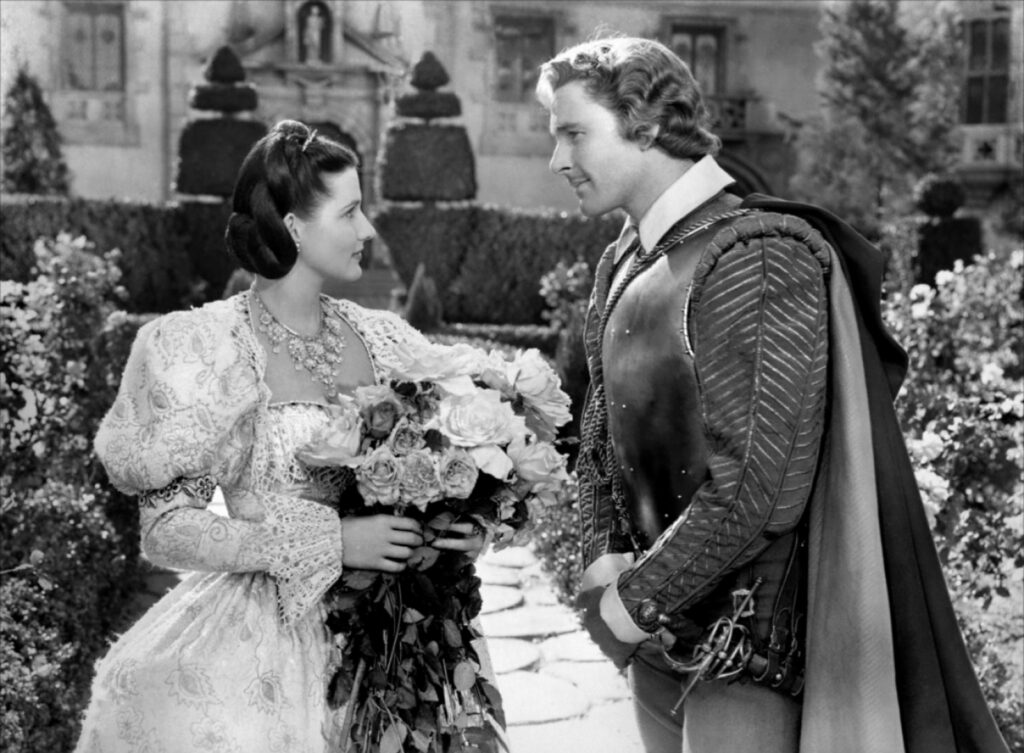
Australian actor Errol Flynn was cast as the main character, English privateer Geoffrey Thorpe. Flynn was one of Warner Bros.’ biggest stars at the time. Although the role of Thorpe was developed with Flynn in mind, Jack L. Warner hoped that a different actor could be cast in the part. Errol Flynn had become increasingly difficult to work with and Warner was growing tired of his antics. Dennis Morgen was considered a potential replacement for Flynn, but the studio ultimately cast Flynn in the part. Geraldine Fitzgerald was the studio’s first choice for the role of Dona Maria, but once Errol Flynn was confirmed for the leading role the studio picked Olivia de Havilland, because WB hoped to continue their successful Flynn-de Havilland line of films. de Havilland was later replaced with Brenda Marshall. The Sea Hawk was only Marshall’s fourth film. Flora Robson was cast in the supporting role of Queen Elizabeth I. She previously played Queen Elizabeth in Fire over England (1937). Robson initially declined the role because she had been cast in the Broadway drama Ladies in Retirement (1940), but Curtiz persuaded her to take the part by promising to shoot her scenes before the stage play began production.
Michael Curtiz filmed The Sea Hawk in early 1940. The scenes set in Panama were shot on location at Point Mugu and Laguna Beach, California. The rest of the film was primarily shot on set at Warner Bros Studios in Burbank. The scenes set in Panama were given a Sepia tone tint to emphasize the heat of the location. The Sea Hawk reused some of the sets and many of the costumes created for The Private Lives of Elizabeth and Essex. Set during the same era, The Private Lives of Elizabeth and Essex was a drama film that starred Errol Flynn and also featured Queen Elizabeth I as a character. Flynn hated Curtiz due to an incident on the set of The Charge of the Light Brigade (1936) and rarely spoke to him on set unless absolutely necessary.
Studio head Jack L. Warner wanted The Sea Hawk to feature full-sized ships. Warner Bros. didn’t have a set large enough to hold a full-scale ship, so the studio built a new soundstage for The Sea Hawk known as Stage 21 or the “Maritime Stage.” The Maritime Stage was large enough to hold two full-scale ships and it included an internal tank that could be flooded. The stage also featured a special backdrop that could realistically simulate waves. The Maritime Stage was the largest soundstage in Warner Bros.’ lot, and the second largest in Hollywood at the time (after MGM’s Stage 15). The soundstage was unfortunately destroyed by a fire in 1951.
Fun Facts and Trivia: Several actors from The Sea Hawk had previously appeared in Errol Flynn’s earlier adventure film The Adventures of Robin Hood (1938). Flynn, Claude Rains, Alan Hale (Carl Pitt), Una O’Connor (Miss Latham), Robert Warwick (Captain Frobisher), Harry Cording (the Slavemaster), Leonard Maudie (Castle Sentry), John Sutton (Captain of the Guard), composer Erich Wolfgang Korngold, director Michael Curtiz, and various others all worked on The Adventures of Robin Hood. The Sea Hawk was character actor Whit Bissell’s first film, he played a gate guard. Bissell would later be known for appearing in science fiction films like Creature from the Black Lagoon (1954) and Invasion of the Body Snatchers (1956).
Basil Rathbone was considered for the role of Lord Wolfingham, but he turned the part down down. Rathbone previously played villains in Flynn’s earlier adventure films Captain Blood and The Adventures of Robin Hood and wasn’t interested in having another sword duel with Flynn. Henry Daniell was cast in the part instead. Unlike Rathbone, Daniell couldn’t fence. His climactic duel with Flynn had to be filmed using a double and intercutting.
Reception: The Sea Hawk premiered in New York City on August 10, 1940. The film went into general release a few weeks later. The Sea Hawk was a financial success for Warner Bros. and it earned a profit for the studio. It was one of the top twenty highest grossing films of the year. The following year Warner Bros. paired Errol Flynn and Brenda Marshall together again for the comedy mystery Footsteps in the Dark (1941).
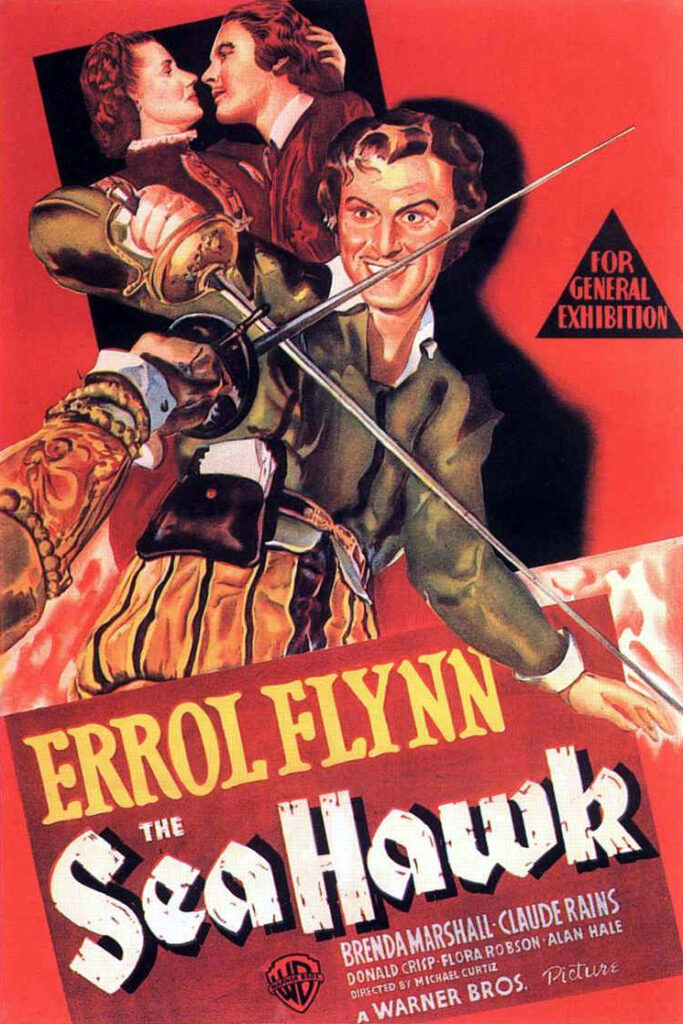
The Sea Hawk received mainly favorable reviews when it was first released. Bosley Crowther of The New York Times gave the film a mostly positive review. He praised the performances of Flora Robson, Claude Rains, and Henry Daniell and was impressed with the set and costume design. However, Crowther was also critical of the film’s historical inaccuracies and thought that some of Flynn’s heroics were too over the top. The critics at Time magazine praised The Sea Hawk for its excitement and general sense of spectacle.
The Sea Hawk has also received a mostly positive response from modern critics. Matt Brunson of Film Frenzy described The Sea Hawk as an “oceanic epic” and stated that it was just as exciting as Flynn’s earlier Captain Blood. John J. Puccio of Movie Metropolis praised The Sea Hawk for its sense of romance and adventure, and also complimented the costumes, sets, and the acting performances. Carol Cling of the Las Vegas Review-Journal, Nell Minow of Movie Mom, and Ken Hanke of Mountain Xpress all gave The Sea Hawk perfect 5/5 star reviews.
Oscars: The Sea Hawk was nominated for four Oscars at the 13th Academy Awards ceremony: Best Score (Erich Wolfgang Korngold), Best Black & White Art Direction (Anton Grot), Best Sound Recording (Nathan Levinson), and Best Special Effects (photographic effects by Byron Haskin, sound effects by Nathan Levinson). At the time there was a distinction between the Best Score (which featured pre-existing music) and Best Original Score categories. Korngold lost the Best Score Oscar to Alfred Newman for the musical Tin Pan Alley. Pride and Prejudice received the Best Black & White Art Direction award, Strike Up the Band received Best Sound Recording, and The Thief of Baghdad won Best Special Effects.
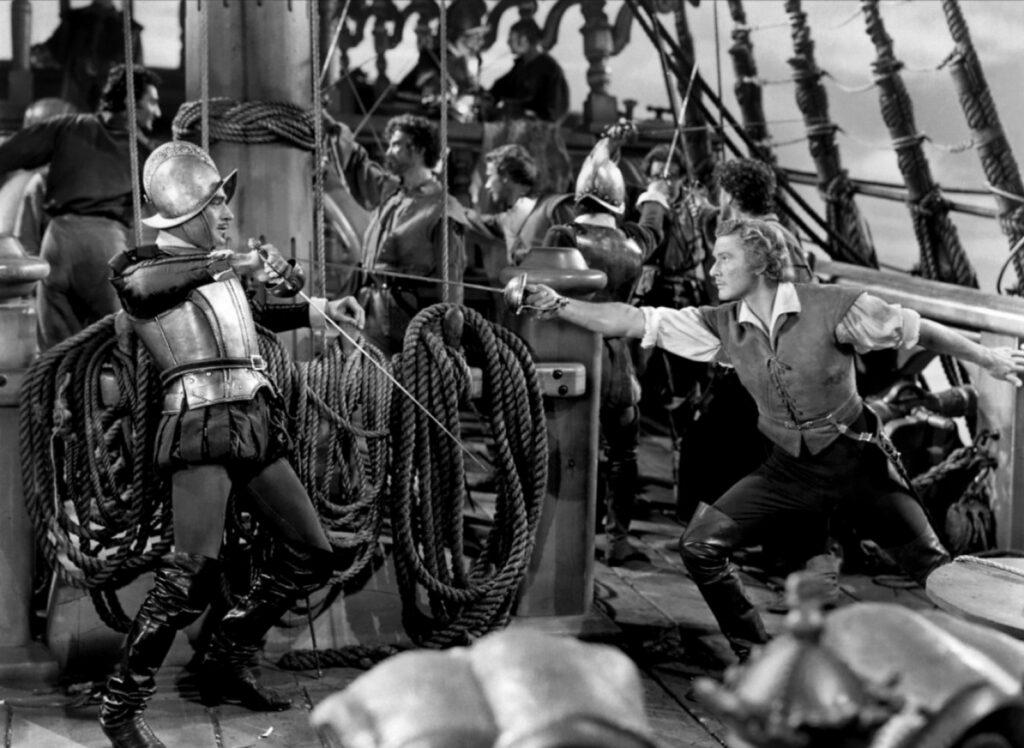
Why You Should See It: The Sea Hawk is great classic adventure film. Erich Wolfgang Korngold’s score is fantastic and compliments the film’s overall heroic/adventurous tone. The Sea Hawk features many exciting moments and plenty of action. The ship scenes all look great and the battle between the Albatross and the Spanish ship was thrilling. Errol Flynn gives a charming and heroic performance. Claude Rains and Henry Daniell also make good villains.